Simple and Professional Guide to GST Registration
Understanding GST:
Goods and Services Tax (GST) is a tax on goods and services consumed in India. It replaces
several previous indirect taxes like excise duty, VAT, and services tax. The GST Act, passed on
March 29, 2017, came into effect from July 1, 2017.
Who Needs GST Registration:
A 'taxable person' under the GST Act is someone conducting business in India. This includes
individuals, companies, LLPs, trusts, and various other entities. Registration is either
mandatory or voluntary based on turnover.
GST Registration Turnover Limit:
-
Service Providers:Required if the aggregate turnover in a year exceeds
Rs. 20 lakhs (Rs. 10 lakhs in special category states).
-
Goods Suppliers: Mandatory if the exclusive supply of goods exceeds Rs.
40 lakhs, with specific conditions.
-
Special Category States:States like Arunachal Pradesh, Assam, and others
are considered special category states.
Types of GST Registration:
-
Regular: For normal taxpayers.
-
GCasual Taxable Persons: : Individuals occasionally supplying goods or
services in a state without a fixed place of business.
-
Non-resident Taxable Persons:Foreign entities supplying goods or
services to India.
-
E-commerce Operators:
Persons selling through digital or electronic platforms.
What is GSTIN?
GSTIN (Goods and Services Tax Identification Number) is a 15-character unique identifier based on
PAN and state. It includes the state code and PAN of the applicant.
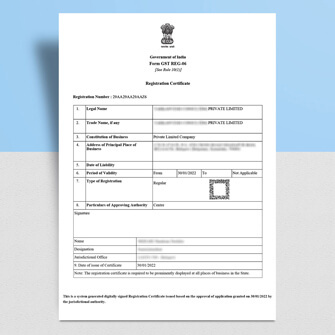
Download GST Registration Certificate:
Registered entities can easily download their GST certificate from the GST Portal under User
Services.
Registering for GST through Vyapar Samadhan:
Obtaining GST registration through Vyapar Samadhan takes less than 7 working days. The process is
entirely online, requiring no physical presence.
Voluntary GST Registration:
Any entity wishing to supply goods or services can voluntarily obtain GST registration. This
allows businesses to avail Input Tax Credit and provide GST bills to customers.
Penalty for Not Obtaining GST Registration:
Failure to register within 30 days of crossing turnover limits can lead to a penalty of Rs.
10,000 and loss of input tax credit during the delay period.
Documents Required for GST Registration:
Documents vary based on the type of business, but common requirements include PAN, Aadhar, bank
account details, and address proof.
Benefits of GST Registration:
-
Bank Loans: Facilitates business track record for loan eligibility
-
Supplier OnboardingOften mandatory for onboarding with reputed
companies.
-
E-commerceEssential for selling on various online platforms
-
Input Tax Credit: Allows businesses to collect GST from customers and
offset it against taxes paid on purchases, improving margins.
GST registration is not just a legal requirement; it offers numerous advantages and opportunities
for businesses to thrive.